Ethiopia’s Annual Inflation Rate Hits 14.4% in May
Ethiopia’s annual inflation rate hit 14.4 percent in May, according to data released by the nation’s statistics agency on Wednesday.
The Ethiopian Statistical Services (ESS) said the magnitude of inflation steadily declined beginning May last year. The inflation rate, however, remains not only elevated but also above the central bank’s medium term target of bringing it down to single-digit.
The May Consumer price index (CPI) report indicates that the general inflation rate in the country which hovered around 22.8% in same the month last year, is now down to 14.4%.
The month-to-month inflation rate – seen as crucial by ESS for monitoring changes in consumer prices – rose by just 0.2% in May compared to what was observed in April, per the report.
The main upward contribution to this came from clothing and footwear (up by 2.8%) while the largest downward contributions came from health (down 2.6%), according to the latest ESS’ data.
Food Inflation stands at 12.1%
The annual food inflation rate, which includes non-alcoholic beverages, rose by 12.1% compared to the same month last year.
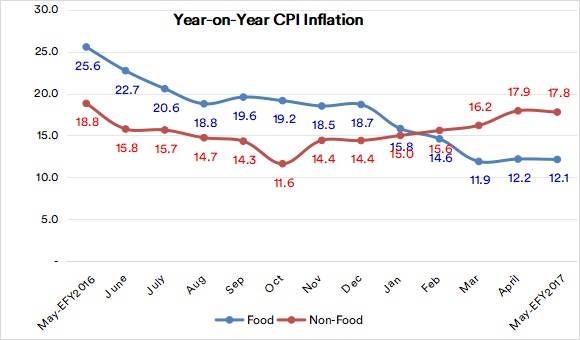
The ESS attributed the year-on-year increase in the food inflation rate for the month of May to the rise in average price of major food commodities.
The largest change in price came from non-alcoholic beverages and coffee showing a 47% year on year increase.
It was followed by oil and fats (26.7%); sugar, jam, honey and chocolate (20.3%); vegetables (14.5%); fruits (14.3%); meat (10%); and bread and cereals (1.5%).
Meanwhile, the annual non-food inflation rose by 17.8% as compared to the month of May in 2024, according to the Ethiopian Statistical Services.
This increase was attributed to the rise on the average prices of major commodities particularly Alcoholic Beverages and Tobacco (14.7%); Housing, water, electricity and other fuel component (18.8%); Furnishings, household equipment and routine maintenance of the House (14.9%); Health (7.3%); Transport (41.4%); Communication (6.2%); Education (12.6%); and Restaurants and hotels (18.3%).