Child Labour Still Affects 138 million Children Globally
- Africa continues to carry the heaviest burden
The world has missed its target of eliminating child labour by 2025 despite a 50% reductions since the turn of the century, a new report released by the ILO and UNICEF says.
In 2024, the report estimates, child labour were affecting nearly 138 million children across the globe. The figure includes around 54 million engaged in hazardous work likely to jeopardize their health, safety, or development.
The latest data also show a total reduction of over 22 million children since 2020, reversing an alarming spike between 2016 and 2020.
The report, titled Child Labour: Global estimates 2024, trends and the road forward, was released one day ahead of the World Day Against Child Labour and on International Day of Play.
And it shows a stark reality that while gains have been made, millions of children are still being denied their right to learn, play, and simply be children.
“Children belong in school, not in work. Parents must themselves be supported and have access to decent work so that they can afford to ensure that their children are in classrooms and not selling things in markets or working in family farms to help support their family,” said the ILO’s Director-General, Gilbert F. Houngbo.
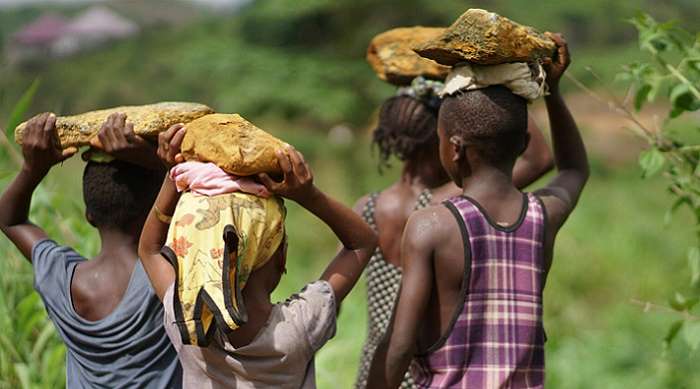
Agriculture remains the largest sector for child labour, accounting for 61 per cent of all cases, according to the latest data. Services (27%), like domestic work and selling goods in markets, comes second followed by industry (13%), including mining and manufacturing.
Asia and the Pacific achieved the most significant reduction in prevalence since 2020, with the child labour rate dropping from 5.6% to 3.1% (from 49 million to 28 million children). Latin America and the Caribbean achieved an 8 per cent relative reduction in prevalence and an 11% decline in total numbers, the report notes.
Sub-Saharan Africa continues to carry the heaviest burden, accounting for nearly two-thirds of all children in child labour – around 87 million. While prevalence fell from 23.9 to 21.5%, the report notes that the total number in the continent has remained stagnant against the backdrop of population growth.
UNICEF’s Executive Director Catherine Russell said, “we know that progress towards ending child labour is possible by applying legal safeguards, expanded social protection, investment in free, quality education, and better access to decent work for adults.”
Sustained and increased funding – both global and domestic – is needed more than ever if recent gains are to be maintained, the UN agencies say.
They also warn that reductions in support for education, social protection, and livelihoods can push already vulnerable families to the brink, forcing some to send their children to work.
Child labour compromises children’s education, limiting their rights and their future opportunities, and putting them at risk of physical and mental harm.
It is also a consequence of poverty and lack of access to quality education, pushing families to send their children to work and perpetuating inter-generational cycles of deprivation.
Since 2000, child labour has almost halved, from 246 million to 138 million, yet current rates remain too slow, and the world has fallen short of reaching the 2025 global elimination target. Current rates of progress would need to be 11 times faster to end it within the next five years.