Ethiopia’s Cenbank Raises Credit Growth Ceiling to 24%
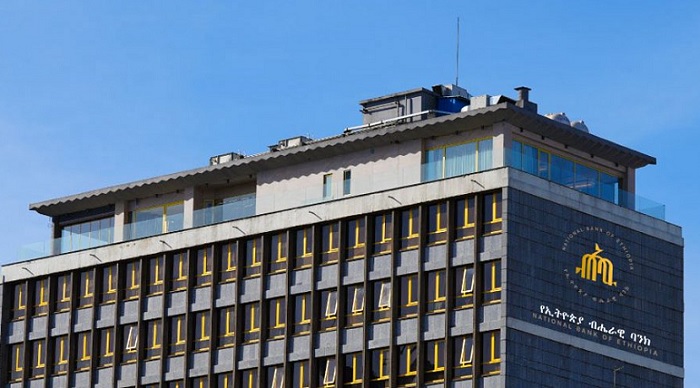
The National Bank of Ethiopia (NBE) has raised the credit growth cap on the private sector to 24% for the current fiscal year as the plan to remove the credit ceiling on hold “for now”.
The Central bank took a tightened monetary policy measures stance in August 2023 to address high inflation driven by excessive loan expansion in the banking sector. The annual credit growth was averaging over 25%.
The move initially saw a 14% cap imposed on private sector credit growth along with limiting the Direct Advances to the Government to just one-third of the prior-year level. The cap was elevated to 18% earlier this year due to declining inflation, tight monetary conditions, and improved supply-side factors.
The Central Bank adopted the tight monetary policy stance as a temporary arrangement until the central bank transitioned to a fully-fledged interest-rate based monetary policy.
The credit cap was expected to be lifted this month.
But the NBE board has decided to retain the credit ceiling “for now” at the recommendations of the bank’s Monetary Policy Committee (MPC) that held its fourth meeting held on Monday.
The meeting reviewed recent inflation trends, and developments in the monetary, financial, fiscal, and external sectors, as well as global conditions affecting Ethiopia’s economy.
The committee agreed that the lifting of the credit growth ceiling “is an important step in advancing the new monetary policy framework with the policy rate serving as a key signal of NBE’s stance.
“However, to safeguard financial stability and preserve recent progress in reducing inflation, the Committee concluded that fully removing the ceiling at this stage would be imprudent, given NBE’s firm commitment to a tight monetary policy,” the Central Bank said in a statement.
The MPC noted the recent data on inflation rate, which stood at 13% in August, “reflects a continued downward trend”.Food inflation came in at 12.7% in the same, down from 18.8% a year earlier.
In contrast, non-food inflation slightly increased to 15.1% compared to a year ago, “partly due to exchange rate pass-through effects”. The month-on-month inflation rate, meanwhile, fell to 1.1%, indicating a moderate easing of new price pressures in the economy.
The overall moderation in inflation over recent months was attributed to the tight monetary policy stance, improved agricultural production, and the gradual adjustment of key administered prices.
The MPC has assessed the progress in reducing inflation as “encouraging” but says the rate remains above the medium-term target of achieving single-digit inflation. A disinflationary monetary policy stance is, therefore, “remain appropriate and should be maintained until further progress is achieved,” the committee agrees.
It has also emphasized that the credit ceiling represents “an important step toward shifting from direct to indirect monetary policy instruments.”
But, it stresses, “careful calibration of the credit ceiling is required to ensure that the resulting credit expansion does not inadvertently loosen the monetary policy stance or create risks to financial stability.”
Accordingly, the Committee put forward three policy actions for the NBE Board’s approval and they are,
First, maintaining the National Bank Rate at 15% while also keeping unchanged existing rates applicable for NBE’s Standing Deposit Facility, Standing Lending Facility, and reserve requirements on bank deposits.
Second, retaining a credit growth target for now, with a moderate upward adjustment. Accordingly, the Committee has decided to raise the credit growth target from 18% to 24% for FY 2025/26. The Committee will revisit this matter in its upcoming meetings.
Third, making use of the full range of market-based monetary policy tools at its disposal. These include the central bank’s policy rate, open market operations, foreign exchange interventions, and adjustments to reserve requirements, among others. The tools may be applied individually or in combination, as needed, depending on prevailing inflationary and monetary conditions.
NBE’s Monetary Policy Committee (MPC) will hold its next meeting in December 2025